Project Update02 May 2026
Inference Is the New Growth Engine
Training built the AI market. Inference is what will scale it, and it is rewriting the requirements for the data centres underneath.
Read more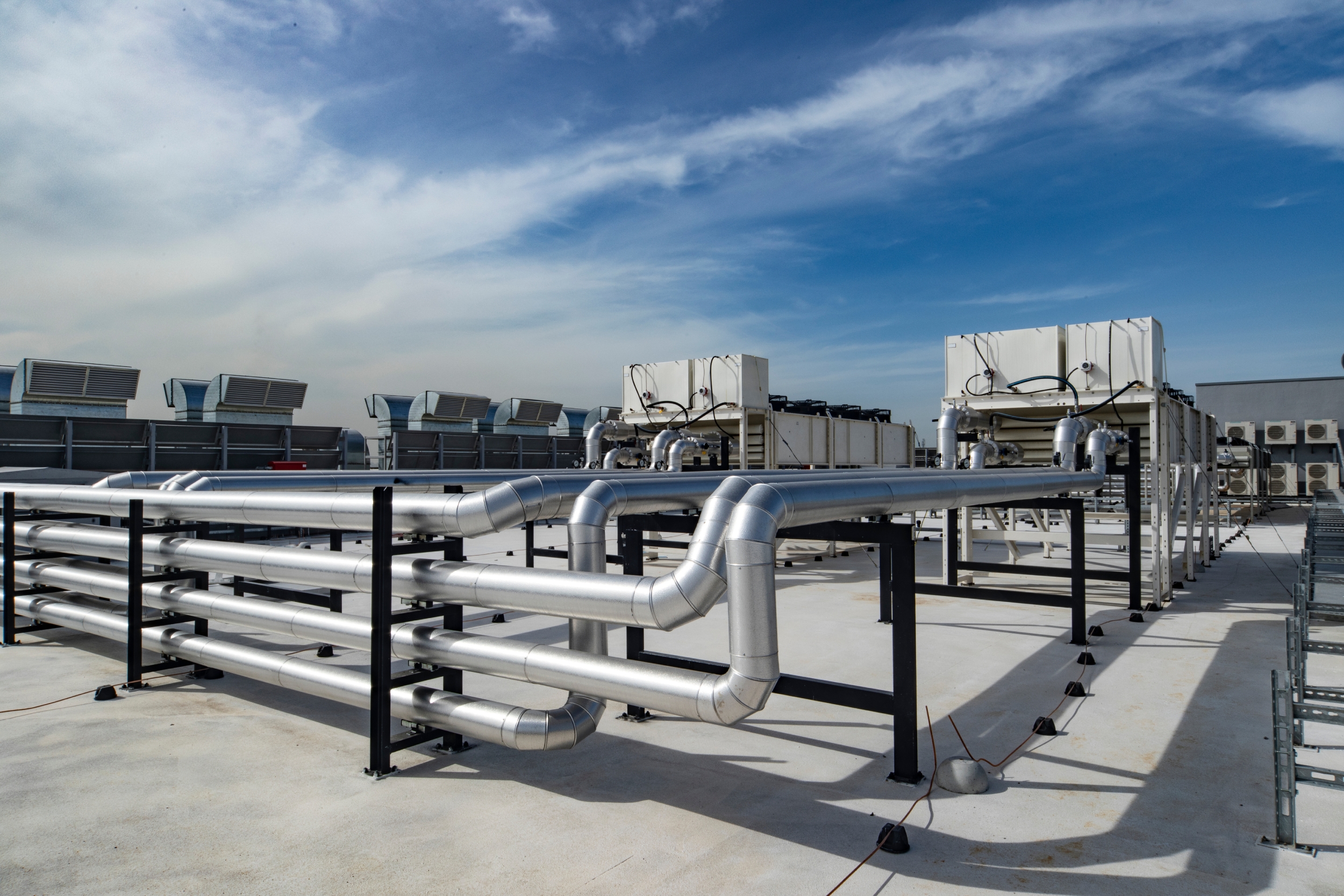
Large language models are moving from novelty to default across Asia Pacific. The harder question is where their compute will live, and the answer increasingly points back to the region itself. The race has moved from model size to AI infrastructure: the hyperscale data centre capacity and cloud computing power that LLMs depend on.
AI Infrastructure · Asia Pacific
On this page
06
For most of the past three years, the LLM story was about the models themselves: which lab had the largest, the smartest, the fastest. In 2026, the centre of gravity has shifted across Asia Pacific.
Enterprises and governments have already decided to adopt LLMs; that debate is over. The real question now is about infrastructure. Where will it sit, who will own it, and can the region build it fast enough to keep pace with demand?
Asia Pacific is now one of the fastest-growing data centre markets on earth. JLL’s 2026 Global Data Centre Outlook forecasts regional capacity rising from about 32 gigawatts in 2025 to 57 gigawatts by 2030. That is a compound annual growth rate of 12 per cent, with AI workloads driving most of the new demand.¹
Data centre colocation and wholesale data centre capacity carry most AI deployments, and both are set to grow faster still.² Appetite is no longer the constraint. The real limits are power, land, and the ability to deliver high-density data centre power capacity on a credible timeline.
~57 GW
projected Asia Pacific data centre capacity by 2030, up from ~32 GW in 2025.3
The surge in LLM usage across the region is broad-based. Enterprises now embed generative AI into customer service, software development, financial analysis and logistics. Two heavy workloads sit behind that demand: AI model training and live LLM inference. Both need serious local compute.
Governments are going further still. They treat domestic compute as critical national infrastructure rather than a service to rent offshore, and many now pursue sovereign AI strategies.⁴ South Korea has committed billions through a national growth fund, plus a far larger sovereign programme spanning industry, R&D and infrastructure.⁵ Japan keeps drawing Western hyperscalers, developers and investors, prized for reliability, efficiency and disaster-resilient design.
Demand for AI is local, yet for years its compute was not, and that mismatch is becoming untenable. Running LLM inference for a Tokyo or Sydney user from a data centre on another continent adds latency, cost and regulatory friction. As models move into real-time products, edge computing pushes inference closer to the user, and the penalties of distance compound. Data-residency rules, sector regulation and a growing preference for sovereign capability all point the same way: towards compute that sits in-region, on stable grids, under local jurisdiction.
Within Asia Pacific, the developed markets carry particular weight. Australia ranks among the most attractive destinations in the world for data centre investment, and 2026 has confirmed that momentum. Marquee hyperscale data centre campuses have been announced. Analysts increasingly place Australia alongside Malaysia and India as the markets best able to absorb the next wave of demand.⁶
The advantages are structural. Australia offers a stable regulatory environment, strong connectivity into the wider region, and abundant land next to established hubs. An accelerating renewable energy build-out matches the sustainability expectations now attached to AI infrastructure, and it supports demand for both data centre colocation and wholesale data centre capacity.
Japan and South Korea complete the picture. Both are mature, high-density markets with exacting reliability standards and intense demand for next-generation GPU cloud capacity. Together, these developed economies give the AI build-out what it badly needs: places where large-scale, high-density compute can be delivered responsibly and at pace.
Capturing this opportunity means more than building more of the same. The workloads driving demand are AI model training and, increasingly, continuous LLM inference served from GPU cloud platforms. They need facilities built for power densities and data centre cooling regimes that conventional sites were never designed to handle.
That raises the bar for data centre power capacity. High-density racks, direct-to-chip and immersion liquid cooling, scalable electrical topology, and support for the latest GPU architectures are now table stakes. From the Nvidia H100 generation onward, serious AI infrastructure is judged on power usage effectiveness, data centre energy efficiency, and how sustainable the data centres really are.
This thinking shapes INSITE DC’s approach. We designed our flagship Melbourne campus as an AI-first platform from day one: high-density, liquid- and immersion-ready, and aligned to next-generation GPU platforms. It is built to scale beyond 400MW. Just as important, we engage partners early, while designs are still flexible. That way capacity is shaped around real workloads instead of retrofitted to them.
In a market where power and timing are the binding constraints, scale, density and early collaboration are what turn regional demand into deployable data centre power capacity. The growth of LLM usage across Asia Pacific is no longer a forecast. It is a present-tense reality, and it is reshaping how the region thinks about cloud computing and digital infrastructure. The economies that thrive in the AI era will be the ones that can host it within their own borders: securely, sustainably and at scale. For Australia and its developed-market neighbours, that is both a challenge and an unusually clear opportunity.
This article is provided for general information and thought-leadership purposes. Market figures are drawn from third-party research as cited and are indicative; capacity, timing and design figures relating to INSITE DC reflect current development plans and are subject to change.
INSITE DC is an Australian developer of next-generation AI and hyperscale data centre infrastructure. Our flagship Melbourne campus is engineered from the ground up for high-density GPU compute, liquid and immersion cooling, leading data centre energy efficiency with a target power usage effectiveness (PUE) of circa 1.3, and a development pathway scaling beyond 400MW. Built on our values of Insight, Never-Fail Reliability, Service Excellence, Integrity, Trusted Partnership and Environmental Responsibility, we co-design infrastructure with our partners rather than for them.

Training built the AI market. Inference is what will scale it, and it is rewriting the requirements for the data centres underneath.
Read moreThe AI build-out is colliding with hard limits on power and water. Developers can no longer treat sustainability as an afterthought — they have to engineer it in from the first line they draw.
Read more